A relative of mine had a ₹5 lakh health insurance policy, which felt comfortable for years — until a cardiac procedure in a private Mumbai hospital came in at nearly ₹9 lakh. The gap had to come out of pocket, from savings meant for something else entirely. Figuring out how much health insurance cover you actually need isn’t something to guess at.
Why the Old ₹5 Lakh Benchmark No Longer Works
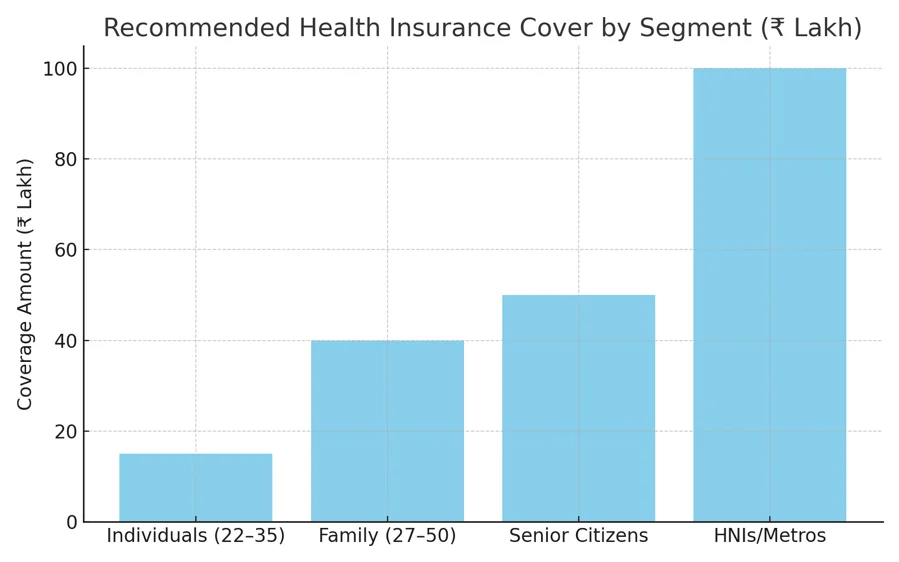
Medical inflation in India has been running at roughly 10-14% annually in recent years, meaning treatment costs that seemed adequate five years ago are now significantly under-covered. For most individuals in metro cities, a minimum of ₹10-15 lakh cover is now considered a more realistic baseline, with families needing proportionally more.
Cardiac surgeries, cancer treatment, and even extended ICU stays can easily cross ₹15-20 lakh in a good private hospital in cities like Bengaluru, Delhi, or Mumbai.
Factors That Determine Your Ideal Cover Amount
Your specific number depends on a few personal factors:
- City tier — metro hospital costs run significantly higher than smaller towns
- Age and existing health conditions — older individuals and those with pre-existing conditions face higher treatment costs and premiums
- Family size — a family floater policy needs to account for the highest-risk member’s potential costs
- Existing employer-provided cover, if any, and its adequacy
[link to related guide on term insurance versus whole life insurance here]
A Practical Formula to Estimate Your Cover
A reasonable starting formula: take your city’s average cost for a major surgery (roughly ₹8-15 lakh in metros), then add a buffer for at least one serious illness occurring within a 5-year window, accounting for medical inflation. This often lands individuals around ₹15-25 lakh of total cover when combining base policy and top-up plans.
This isn’t a precise science, but it gives you a far more grounded number than picking a round figure arbitrarily.
Base Policy Plus Super Top-Up — A Smart Combination
Rather than buying one large base policy (which can be expensive), many advisors recommend a smaller base policy — say ₹5-10 lakh — combined with a super top-up plan that kicks in after a deductible, often ₹5 lakh. This combination can get you ₹25-30 lakh total effective cover at a meaningfully lower premium than one large standalone policy.
I’ve used this structure myself for the past few years — the premium savings compared to a single large policy were substantial.
Don’t Rely Solely on Employer Health Insurance
Employer-provided health cover is a nice bonus, but it disappears the moment you leave the job, and coverage amounts are often modest — frequently ₹3-5 lakh for the whole family. Relying entirely on this without a personal policy is a genuine risk, especially during job transitions or after retirement.
[link to related guide on how to build an emergency fund here]
Family Floater vs Individual Policies
A family floater covers all members under one shared sum insured, which is usually cheaper than buying individual policies for each person. The trade-off: if one family member has a major claim, the remaining cover for others in that policy year shrinks accordingly.
For families with elderly parents or anyone with existing health conditions, separate individual policies for higher-risk members sometimes makes more financial sense than a shared floater.
What to Check Beyond the Cover Amount
- Room rent limits — some policies cap room rent, forcing you to pay the difference for higher categories
- Sub-limits on specific treatments, like cataract surgery or knee replacements
- Waiting periods for pre-existing conditions, typically 2-4 years
- Network hospitals available for cashless treatment in your specific city
A high cover amount doesn’t help much if the policy’s fine print restricts what actually gets paid out.
FAQs
Is ₹5 lakh health insurance still adequate in 2026? For most metro residents, ₹5 lakh alone is increasingly insufficient given rising treatment costs; combining it with a top-up plan is generally advisable.
Should senior citizens buy a separate policy instead of joining a family floater? Yes, senior citizens often benefit from a dedicated policy, since their higher risk can quickly deplete a shared family floater’s sum insured.
Does a higher sum insured always mean a proportionally higher premium? Not always — moving from a base policy to a combined base-plus-top-up structure often increases effective cover significantly without a proportional premium jump.
Can I have multiple health insurance policies simultaneously? Yes, you can hold multiple policies and claim across them, coordinating with insurers to split the total claim amount as needed.
How often should I review my health insurance cover amount? Ideally every 2-3 years, or immediately after major life changes like marriage, having children, or a significant income increase.
Conclusion
Figuring out how much health insurance cover you need isn’t about picking a comfortable round number — it’s about honestly accounting for medical inflation, your city’s treatment costs, and your family’s specific risk factors. A base-plus-top-up combination often offers the best balance of adequate cover and affordable premium.
If your current policy hasn’t been reviewed in a few years, pull it out this week and actually check whether the sum insured still makes sense against today’s hospital costs.