A friend once challenged herself to save ₹1 lakh in six months for a down payment on a bike, and honestly, I was skeptical at first — her salary wasn’t huge, and Bengaluru isn’t cheap. She actually pulled it off, five days ahead of schedule, mostly through boring, unglamorous consistency rather than any dramatic lifestyle overhaul. Here’s roughly how to save money fast using that same practical framework.
Breaking Down the Target Number
Saving ₹1 lakh in 6 months means setting aside roughly ₹16,700 per month, or about ₹555 per day. Breaking a large goal into a small daily number makes it feel significantly more achievable than staring at the full ₹1 lakh figure all at once.
This reframing genuinely matters psychologically — ₹555 a day sounds manageable; ₹1 lakh sounds intimidating.
Step 1: Audit Your Last 3 Months of Spending
Before cutting anything, understand where money currently goes. Pull up your last three months of bank and credit card statements, categorize the spending, and identify the top 3-4 categories where you’re spending more than you’d consciously choose to if asked directly.
[link to related guide on how to create a monthly budget here]
Step 2: Identify Your Biggest “Leak” Category
For most people, this tends to be food delivery, subscriptions, or impulse online shopping. Pick the single biggest leak and commit to cutting it by 50% for the six-month period — not eliminating it entirely, since total elimination rarely survives past week two.
Step 3: Automate the Full Monthly Target Immediately
Set up an automatic transfer of your calculated monthly target — in this case around ₹16,700 — to a separate savings account or liquid fund on salary day, before any other spending happens. Treating this transfer like a non-negotiable bill, similar to rent, dramatically increases the odds of actually hitting the target.
Keep this money in a slightly less accessible account — not literally locked, but not sitting in your primary spending account either — reducing the temptation to dip into it.
Step 4: Find Two or Three “Bonus” Income Sources
Rather than relying purely on cutting expenses, look for supplementary boosts:
- Sell unused items — old electronics, clothes, furniture — through OLX or Facebook Marketplace
- Redirect any bonus, tax refund, or cashback directly into the savings goal instead of regular spending
- Take on a small freelance project or gig if you have a marketable skill and spare time
- Cash in any unused reward points or cashback sitting idle in various apps
Even ₹15,000-20,000 from these combined sources over six months can meaningfully accelerate reaching the target.
[link to related guide on 10 passive income ideas here]
Step 5: Track Weekly, Not Just Monthly
Checking progress only once a month makes it too easy to fall behind without noticing until it’s too late to course-correct. A quick weekly check — even just glancing at the savings account balance — helps you catch and adjust for a bad week before it snowballs into a bad month.
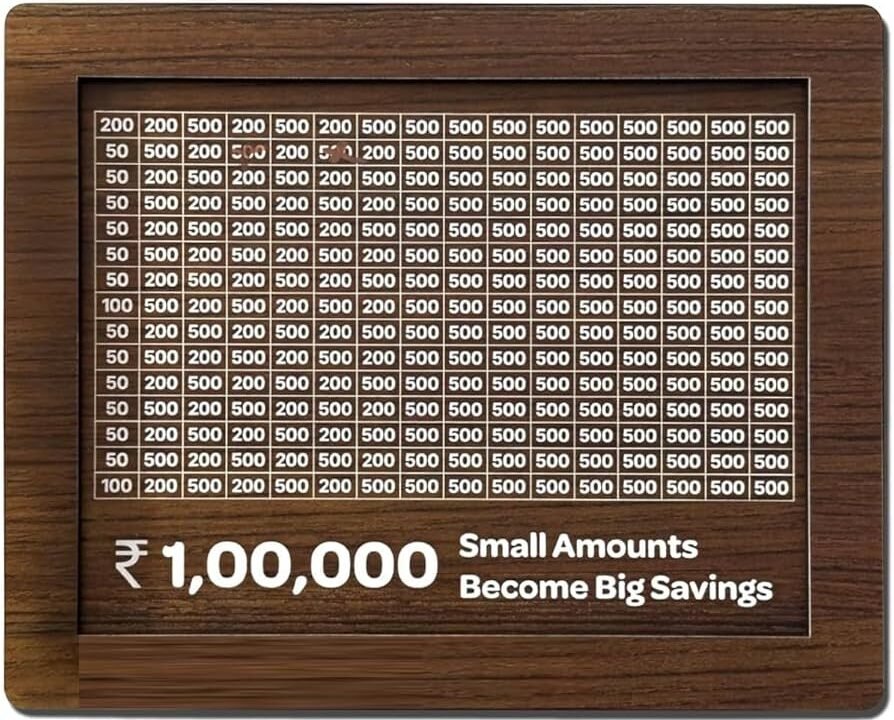
Step 6: Use Visual Progress Tracking
Something as simple as a printed thermometer chart on your wall, or a savings tracker app, showing progress toward ₹1 lakh can be surprisingly motivating. Watching a number visibly climb tends to reinforce the habit far more than an abstract spreadsheet entry.
What to Do When You Slip Up
Some months won’t go perfectly — an unexpected expense, a slower income month. When this happens, don’t abandon the entire goal. Adjust the timeline slightly, or make up the shortfall the following month, rather than treating one bad month as a total failure.
A Realistic Month-by-Month Breakdown
- Month 1-2: Focus on auditing spending and cutting the biggest leak category, aim for ₹15,000-16,000 saved
- Month 3-4: Add supplementary income sources, push toward ₹17,000-18,000 monthly
- Month 5-6: Maintain momentum, use any bonus or windfall to close the final gap
FAQs
Is saving ₹1 lakh in 6 months realistic on an average Indian salary? It depends heavily on your income level and existing expenses, but for many mid-range salaries, it’s achievable with disciplined cuts and some supplementary income.
Should I invest this saved money or keep it purely in a savings account? For a 6-month goal, keeping it in a liquid fund or high-interest savings account makes more sense than equity, since you need the principal protected and accessible.
What if my expenses are already very lean and I can’t cut much further? Focus more heavily on the supplementary income strategies — selling unused items, freelancing, redirecting bonuses — rather than trying to squeeze an already tight budget.
How do I stay motivated over a full 6-month savings challenge? Visual progress tracking, weekly check-ins, and celebrating smaller milestones (like hitting the halfway point) genuinely help maintain motivation over a longer stretch.
Is it better to save a fixed amount monthly or save whatever’s left over? A fixed, automated amount consistently outperforms the “save what’s left” approach, since it removes reliance on willpower at the end of each month.
Conclusion
Learning how to save money fast toward a specific goal like ₹1 lakh in six months comes down to breaking the number into manageable daily and monthly targets, automating the savings, and supplementing with a bit of extra income where possible. It’s genuinely doable without extreme sacrifice, as long as you stay consistent.
Calculate your own monthly target right now based on your specific goal amount and timeline, and set up that first automatic transfer before this week is over.